
Why scams keep working in trading and investing
Financial scams survive because they borrow the language of real markets. They talk about execution, liquidity, timing, access, momentum, and returns. To anyone with basic trading knowledge, that vocabulary sounds familiar enough to lower the guard a little. That small drop in scepticism is often all the scammer needs. Fraud in finance is rarely built on cartoon villain nonsense. Most of it sits closer to the real thing than people want to admit. The website looks polished, the sales pitch sounds market literate, the account dashboard shows trades, and the support staff answer quickly. It can look more organized than some legitimate firms, which is a grim little joke until the withdrawal request gets blocked.
Traders and investors are also easier targets than they like to think because the market itself trains certain behaviours. Speed matters. Conviction matters. Hesitation can cost money. A good setup does not wait around for emotional closure. Scammers copy that environment and push it one step further. They do not say “ignore your process.” They say “act before the window closes.” That sounds close enough to real trading that many people treat it as normal friction rather than a warning sign. The DayTrading.com safety hub is useful here because it frames safety as part of trading practice, not as some separate chore for nervous beginners.
Another reason scams keep landing is that people confuse bad investing with fraud. Losses happen in real markets every day. A bad trade, a bad entry, or a bad thesis is not evidence of criminal conduct. But the reverse mistake happens too. People lose money to deception and then assume they were simply careless traders who picked the wrong platform or trusted the wrong analyst. That delay helps the scammer. It slows reporting, weakens evidence, and creates space for the next demand for money. Sometimes the victim does not realise it was fraud until a fake tax bill, release fee, or recovery offer arrives. By that stage, the same lie has already been wearing three different hats.
The basic point is not subtle. Financial scams work because they sit inside normal market behaviour just long enough to feel plausible. Anyone who trades or invests should treat scam prevention the same way they treat position sizing, broker selection, or counterparty risk. It is part of the job. The broader DayTrading.com index is handy for that wider context, because broker and platform choices sit right next to education, tools, and market guides. In practice, that is where safety belongs.
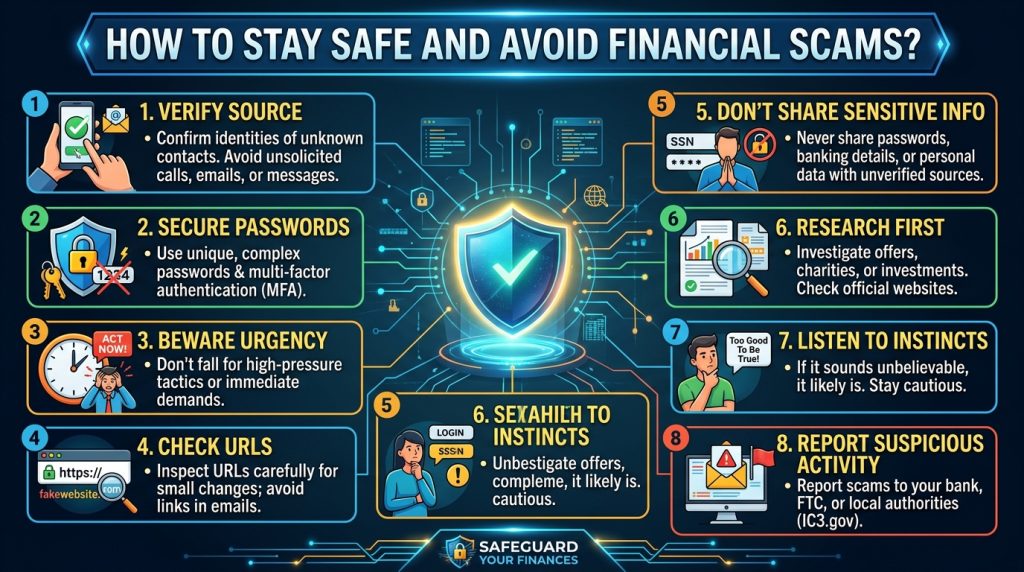
What a financial scam looks like in practice
The standard investment scam has a simple structure. First, it creates trust. Then, it creates momentum. Then, it converts both into payment. Trust may come from a fake broker brand, an apparently licensed adviser, a social media personality, a relationship built through messaging apps, or a private group that presents itself as selective and informed. Momentum usually comes from a mix of urgency and proof. There will be screenshots, profit statements, “client” testimonials, account balances, trade calls, maybe a successful first withdrawal if the operation is patient. Then comes payment, which is where the real design shows itself.
One common model is the fake broker or fake trading platform. A person signs up, funds an account, sees activity on a dashboard, and may even speak to an account manager who seems knowledgeable. Small withdrawals can be allowed early because that reduces suspicion and encourages bigger deposits later. Once the victim increases the account size, the rules change. A compliance issue appears. A tax charge appears. The account needs an additional deposit to unlock profits. The balance can be seen, but not touched. That is not a technical problem. That is the scam finally dropping the polite voice.
Another model is the clone firm. This one is nastier because it piggybacks on real registration details. The website, phone number, or email domain is different, but the name of a legitimate firm may be copied, or the registration number is lifted and pasted onto the scam site like it means something by itself. Many people stop checking after they see a regulator logo or a real sounding licence number. That is exactly the habit clone scammers depend on. A number is not verification. Matching details are verification.
Signal scams are a different flavour. These are common in forex, crypto, options, and low priced equities. The promoter sells access to winning calls, insider style market timing, copy trading, or a private room where “serious” traders share setups before the public sees them. Sometimes the real product is a subscription. Sometimes it is an introducing arrangement into a fake broker. Sometimes it is a pump operation dressed up as market commentary. The audience is told that the room has a track record, but the evidence is usually selective, unverified, and neatly immune to outside checking. Funny how every losing trade goes missing right when the screenshots are prepared.
Relationship led investment fraud, sometimes grouped with romance or pig butchering style scams, works more slowly. The financial topic may not appear at the start. The scammer builds trust over days or weeks, often through social media, dating apps, or messaging platforms. Once the victim is comfortable, the scammer introduces a trading opportunity, usually on a fraudulent platform showing false gains. This model works not because the victim lacks intelligence, but because trust was built in a context where financial scepticism was not switched on from the beginning.
Then there is the recovery scam. This arrives after the victim has already lost money. Someone claims they can trace the funds, reverse the crypto, secure compensation, or liaise with regulators. They may sound like lawyers, investigators, compliance officials, or exchange specialists. Their real goal is simple: charge an upfront fee, gather more personal information, and continue the extraction. The first scam steals the money. The second scam steals the hope.
What ties all these models together is not the asset class. It is the control of information. The scammer decides what the victim sees, when they see it, who they can ask, how quickly they must act, and which payment route gets used. Once you look at fraud as information control plus money movement, the pattern gets much easier to spot.
Red flags that deserve immediate attention
The cleanest red flag is a claim that does not fit real markets. Guaranteed returns do not belong in speculative trading. Neither do stable high returns with little or no downside. The wording changes, but the message is familiar. The strategy is “safe.” The returns are “consistent.” The drawdowns are “managed away.” The trader has “never had a losing month.” Anyone who has spent enough time around live markets should hear alarm bells at that point. Even strong strategies have rough patches, slippage, behavioural drift, liquidity issues, and plain bad luck. Fraud begins where risk is denied, not just where it is underestimated.
Urgency is another strong signal. The opportunity expires today. The fund transfer must be made now. The account needs a top up before profits can be released. The sales person says the market is moving and there is no time for extra checks. None of that proves fraud on its own, but urgency is one of the most reliable tools in the scam playbook because verification takes time and time is bad for deception. If a proposition gets weaker the moment you pause to verify it, that proposition was never worth much.
A third warning sign is pressure to move the conversation off formal channels. You may start on a website or social media page, but soon the real instructions shift to Telegram, WhatsApp, Signal, or direct messages. There is always a reason. It is faster. It is more personal. It avoids delays. The account manager can help more closely there. In reality, private chat gives the scammer more control and leaves the victim with weaker records. Regulated firms do not need disappearing messages to discuss funding, compliance, or investment advice.
Payment friction is one of the most underrated warning signs. It matters who receives the money, how they receive it, and whether that matches the entity you thought you were dealing with. If a platform claims to be a regulated broker but asks for crypto to a private wallet, or requests a wire to a company with a completely different name, the problem is not cosmetic. It goes to the centre of the relationship. The entity taking your money is the entity that matters. Everything else is brand paint.
Withdrawal friction matters even more. Many scams are designed to look functional until you try to remove funds. A real broker may require identity checks or process withdrawals within stated terms. A scam platform invents barriers. There is a release fee, a tax bill, an insurance charge, an anti money laundering deposit, or a minimum balance requirement that appears only after the withdrawal request is submitted. This stage often reveals the fraud more clearly than the original sales pitch. A useful rule is that new payments demanded solely to release your existing balance should be treated as presumptively suspicious unless independently verified through official channels.
Fake regulation claims deserve serious attention. Scam sites often display badges and logos from well known authorities because users recognise the names but do not always verify the details. Sometimes the scammer copies a real registration number from a genuine firm. Sometimes the wording is vague enough to sound official while saying nothing precise at all. “Regulated by international authorities” is not a real regulatory status. It is decoration. Proper verification means checking the official database, matching the firm name, matching the web domain, matching the contact details, and confirming that the activity being offered fits the permissions on record.
The quality of support can also mislead people. Fast chat replies, a smooth onboarding call, and a polished client portal are not proof of legitimacy. They may only prove that the scam budget was not tiny. In fact, fraud operations often look unusually attentive because every extra reply helps move the victim toward a larger deposit. Good service is not the same thing as legal standing. This should be obvious, but markets are full of people who would never trust a bad website with their streaming subscription and will still wire money to a beautiful fraud because the account manager sounded calm.
There is also the social proof trap. Screenshots of profits, testimonials, influencer endorsements, group chat enthusiasm, and claims that “thousands are already in” all create pressure to normalise the proposition. None of that is verification. Screenshots can be fabricated, selective, or lifted from elsewhere. Testimonials can be planted. Influencers may be paid, misled, or openly participating in the scheme. Group excitement is especially dangerous because people often assume a crowd has done the checking they did not do themselves. Usually, the crowd is assuming the same thing.
Another red flag is complexity without necessity. The product structure becomes hard to explain, yet the confidence level somehow rises. There may be proprietary AI execution, cross market liquidity routing, pre IPO access, private allocations, crypto yield layers, or tokenised claims on something no one can clearly define. Complexity is not proof of fraud, but fraud loves complexity because it makes simple questions feel unsophisticated. If you cannot explain how money is made, where it sits, who holds it, and how it comes back to you, you are already too far in.
Finally, pay attention to your own behaviour. If you notice yourself rushing, hiding the situation from someone sensible, or making excuses for gaps you would normally reject, step back. Scam detection is not only about spotting external clues. It is also about noticing when your own judgement has started bargaining with obvious risk. That is the part people hate admitting, which is fair enough, but markets do not hand out refunds for pride.
How to verify a broker, platform, or promoter
Verification starts with the legal entity, not the brand. Brand names are easy to invent, copy, or borrow. Legal entities are harder to fake cleanly across multiple checks. Before sending any money, identify the full registered name of the company, the jurisdiction where it is registered, the services it is authorised to provide, and the exact contact details listed in official records. If those details are not easy to find, that is already a problem.
For brokers and financial professionals connected to US securities business, the first stop should be FINRA BrokerCheck. That lets you look up firms and individuals, review registration history, and see disclosures. For investment advisers, the SEC’s Investment Adviser Public Disclosure system matters because it gives access to records including Form ADV. If futures or certain forex activity is involved, the NFA BASIC database is relevant. For firms operating in or targeting the UK, the FCA register and its Warning List are necessary checks. None of these databases are perfect shields, but skipping them is lazy in a way the scammer will deeply appreciate.
The important part is matching, not just searching. Finding a real firm with a similar name is not enough. You need the exact website domain, phone number, email domain, office address, and legal entity to line up with the registry information. This is where clone firms often fail. The scam site may use a genuine company name but a different domain, or it may copy the registration number while changing the contact details. That mismatch is the whole story. If the regulator entry says one website and you are being directed to another, stop there.
The same logic applies to individuals. If someone claims to be licensed, find them in the relevant database and compare the details independently. Do not trust screenshots of licences, PDF certificates, or links sent by the promoter. Source the registry yourself. That one habit blocks a depressing amount of fraud. Scammers love controlling the path to “verification” because then the victim only verifies the scammer’s version of reality.
Domain and site checks matter as secondary signals. A recently created domain, hidden ownership details, weak legal disclosures, and broken or copied policy pages do not prove criminal intent by themselves. But when they sit next to aggressive sales behaviour and mismatched registration claims, the pattern becomes pretty ugly. A real financial firm should leave a paper trail. It should have terms, policies, disclosures, complaint routes, and formal contact channels that are stable enough to survive independent inspection.
Payment verification is where many people get careless. Before sending funds, confirm the exact beneficiary name, the account details, and the reason those details connect to the firm you verified. If a regulated brand wants money sent to an unrelated company with no clean explanation in official documents, pause. If card processing appears under an unexpected merchant, pause. If the only funding option is crypto to a private wallet, pause longer. Payment routes tell you who is really taking the money, which is useful because that is usually the person or entity you will be fighting later.
Small scale operational testing helps, but it should be treated properly. Start with the smallest amount that allows you to test account opening, trading functionality if relevant, support quality, fees, and withdrawal processing. Try a withdrawal early. Not because one successful withdrawal proves legitimacy, it does not, but because a failed or obstructed one can reveal problems before the exposure grows. Many victims do a test deposit and then scale up far too quickly, as if the hard part was wiring money in. It was not. The hard part was getting it back out.
You should also verify the business model. Ask dull questions and insist on dull answers. Who executes the trades. Where is the custody. What law governs the agreement. What are the fees. What happens if the firm becomes insolvent. What is the formal complaint route. If the response slides from facts into mood, stop. A lot of scams survive because the victim accepted a feeling of professionalism instead of evidence of professionalism.
For research and reporting pathways after the fact, the BrokerListings guide on reporting scams is useful, though it is even better read before money moves because it shows what evidence and reporting routes become important once a problem appears. Strange thing about prevention, it often looks boring right until it would have saved you.
Practical scam prevention for active market participants
The best anti scam measures are procedural. They work because they remove decision making from the most emotional moments. Active traders already understand this idea in other settings. They use position limits, stop rules, margin controls, and journal reviews because process is more dependable than mood. Scam prevention should be treated the same way.
The first habit is channel discipline. Never accept funding instructions, withdrawal instructions, or account recovery instructions from private chat unless you independently confirm them using official contact details you sourced yourself. This rule sounds almost insultingly simple, which is exactly why it is useful. The strongest controls are often plain enough to survive real life.
The second habit is trust sizing. New broker, small amount. New platform, small amount. New manager, zero discretion until verification is complete. Exposure should rise only after checks, time, and real world testing. Traders are used to scaling positions. The same thinking should apply to counterparties. You do not owe instant confidence to a company just because it bought a sleek website.
The third habit is security hygiene. Use unique passwords, proper two factor authentication, and a clean separation between email, phone, banking, broker, and exchange access. Do not share one time codes. Do not allow remote device access for trading support. Do not store recovery phrases carelessly. A surprising amount of financial fraud is only half investment scam and half account compromise. Once a scammer controls access, the damage spreads faster than the victim expects.
The fourth habit is documentation. Save onboarding emails, account agreements, confirmations, screenshots of balances, payment receipts, and support exchanges. People think keeping records is something you do after trouble starts. It is better done before. Evidence is cheaper to collect in real time than to reconstruct later from memory and regret.
The fifth habit is keeping one disinterested outside opinion available. Not a hype merchant from a group chat, a real person who is willing to ask annoying questions. A spouse, colleague, accountant, or experienced trader with no stake in the deal can often spot what the victim has normalised. Fraud narrows perspective. Outside review widens it again.
None of this requires paranoia. It requires routine. In markets, routine is underrated right up until it saves someone from an expensive mistake. Then suddenly everyone becomes a philosopher of discipline.
What to do if you have already sent money
If you suspect you have been caught in a scam, stop sending money immediately. Do not negotiate, do not argue, and do not treat the next requested payment as the one that finally unlocks the account. That is the point where many losses get worse. Once the scammer knows the victim is anxious, the pressure usually increases.
Preserve every record you have. Save chat logs, emails, screenshots, transaction receipts, wallet addresses, platform URLs, names used by the people contacting you, phone numbers, and bank details. If the platform showed account balances or pending withdrawals, capture those too. Evidence matters because banks, regulators, law enforcement, and civil advisers all need something concrete to work with. “It all happened in chat and I deleted it” is a rough place to start from.
Then contact the payment provider. If it was a bank transfer, reach the bank’s fraud team as fast as possible and ask about recall or tracing options. If it was a card payment, ask about chargeback rights and merchant dispute procedures. If crypto was involved, report the receiving address to the relevant exchange or service provider if one can be identified, and preserve transaction hashes. Recovery is far from guaranteed, but speed gives you at least some chance of interrupting the flow.
Change passwords from a clean device if there is any chance the scammer gained account access, remote access, or personal security information. Review email security first, because email often sits at the centre of account recovery. Then review banking, broker, exchange, and phone account protections. If a remote access tool was installed, remove it and check the device properly. The scam may not end with the original payment if digital access is still open.
Report the scam through official channels relevant to the product and jurisdiction. That can include the FTC, the SEC tips and complaints portal, FINRA, the CFTC fraud reporting resources, or the FCA scam reporting channels. Even where direct recovery is unlikely, reporting helps connect patterns, supports institutional responses, and creates a formal record of what happened.
Be ready for the second wave. Recovery scammers actively target recent victims. They may claim to be investigators, tracing experts, lawyers, exchange officers, or regulators. They often sound more convincing than the first scam because they already know parts of the story. Do not pay upfront for recovery on the basis of cold contact. Initiate every follow up yourself through official sites and independently sourced contact details. Hard experience says this plainly: when money has already been stolen, hope becomes part of the attack surface.
Closing view
Avoiding financial scams is less about instinct than procedure. Good instincts help, but procedure holds up better when money, pressure, and embarrassment enter the room. Verify the legal entity. Match the details. Test small. Watch the payment route. Treat withdrawal problems as serious signals. Ignore claims that cannot survive independent checking. In trading, people often say process beats emotion. Same rule here, just with fewer charts and more unpleasant phone calls.
This article was last updated on: May 8, 2026