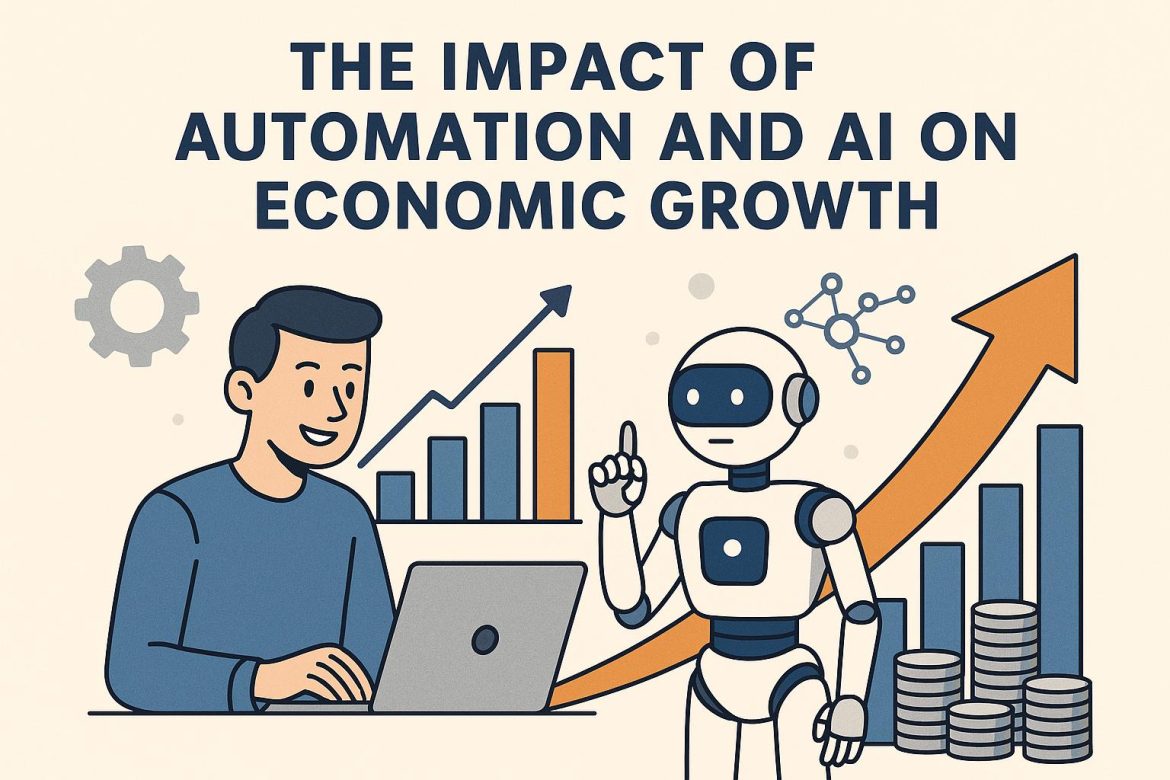
The Impact of Automation and AI on Economic Growth
The integration of automation and artificial intelligence (AI) in various sectors has been reshaping the global economic landscape. As industries evolve, the influence of these technologies becomes increasingly significant, prompting discussions about their potential effects on economic growth.
Enhanced Productivity
One of the most notable impacts of automation and AI is the boost in productivity. By streamlining processes and reducing the need for manual intervention, businesses can achieve greater efficiency. Machines and AI algorithms can perform repetitive tasks with precision and speed, which often surpass human capabilities. This translates into higher output with lower input costs.
Increased Efficiency: Automation technologies enable organizations to perform routine tasks faster and with fewer errors. Whether it’s automated machines in a factory setting or AI systems managing data, the productivity gains resulting from these technologies often lead to cost savings and improved output. For example, AI-powered chatbots can handle customer queries at any time, providing faster service than human operators.
Quality Improvement: Beyond just speed, the precision of machines and AI systems can lead to improvements in product quality. Error rates are significantly reduced, especially in production processes where consistency is crucial. This not only enhances customer satisfaction but also reduces the costs associated with rework and quality control.
Sector-Specific Developments
Automation and AI have varied effects across different sectors. In manufacturing, robots are used to perform assembly tasks, ensuring consistency and reducing errors. AI technologies facilitate highly efficient production lines where machinery adjusts to real-time feedback, optimizing itself without human intervention. In finance, AI algorithms are employed to analyze data trends, aiding in more informed decision-making. The power of AI to churn through vast datasets allows financial analysts to uncover insights that might be overlooked by human analysis alone. The healthcare sector benefits from AI through diagnostic tools that help in early disease detection. Advanced AI systems can identify patterns in medical imaging, often detecting conditions sooner than traditional methods, thus providing a crucial head start in treatment.
These advancements create a ripple effect across the economy, influencing both upstream and downstream markets. Companies that supply parts to AI-driven industries experience increased demand, while those that rely on the output benefit from enhanced efficiencies and lower costs.
Employment Dynamics
The automation trend brings about changes in employment patterns. While certain jobs may be displaced, new opportunities arise in other fields, such as tech development and system maintenance. Jobs in AI development, data analysis, and machine learning are becoming more prominent, reflecting the shift in necessary skills. This shift requires a workforce equipped with new skills, underscoring the importance of reskilling and upskilling initiatives.
Job Displacement and Creation: Automation tends to replace jobs that involve repetitive and predictable tasks; however, it also creates jobs that require advanced technical skills. For instance, manufacturing workers may need retraining to operate sophisticated AI-driven equipment.
Education and Adaptation: Therefore, investment in education and training becomes crucial to ensure workers can transition effectively. Educational institutions and companies need to collaborate to design curriculum and training programs that are aligned with the needs of an advancing technological landscape.
Economic Disparities
While automation and AI contribute to growth, they may also exacerbate existing economic disparities. Companies with resources to invest in these technologies gain competitive advantages, potentially leading to market concentration. Larger corporations can invest in developing custom AI solutions that enhance their operations, while smaller companies may face challenges in accessing similar technologies.
Impact on Small Enterprises: Meanwhile, small enterprises lacking such resources may struggle to compete, which could widen the income gap. This could lead to a market where a few large players dominate, reducing consumer choice and potentially stifling innovation.
Moreover, workers in industries that are slow to adapt to new technologies may face prolonged periods of unemployment or underemployment, further widening income disparities both within and between countries.
Policy Implications
Governments play a pivotal role in managing the transition towards an AI-driven economy. Policies encouraging innovation, investment in technological infrastructure, and support for affected workers are essential. For example, subsidies and tax benefits could be explored to incentivize small and medium-sized enterprises (SMEs) to adopt automation technologies.
Regulatory Frameworks: Moreover, ethical considerations such as data privacy and algorithmic bias need addressing to safeguard societal interests. Legislators need to establish frameworks that ensure AI systems are transparent and fair, preventing misuse and protecting user privacy.
Global Perspective
On a global scale, the adoption of automation and AI is uneven, with developed nations often advancing more rapidly. This leads to a technological divide, impacting cross-border trade and international competitiveness. Countries with strong technological infrastructures can maintain a competitive edge in global markets, while others may lag.
Addressing Global Disparities: Collaborative efforts are necessary to minimize such disparities and promote inclusive growth. International partnerships, technology transfers, and capacity-building initiatives could help bridge the technological divide, ensuring no nation is left behind in the digital revolution.
Future Outlook
The trajectory of automation and AI suggests sustained influence on economic growth, with ongoing innovations likely to further transform industries. The ever-improving capabilities of AI systems promise continued impact on how businesses operate and compete.
Balancing Technological Advancement: Balancing technological advancement with societal needs remains a critical challenge. Policymakers, industry leaders, and educators must collaborate to create an environment that nurtures innovation while protecting and preparing the workforce.
Key Takeaway: As automation and AI continue to evolve, their impact on economic growth is profound yet complex, necessitating careful consideration and strategic action to harness their benefits while mitigating adverse effects. Developing proactive strategies to manage the transformation will be essential for ensuring that economic growth driven by technology is inclusive and sustainable for all.
This article was last updated on: February 8, 2026