Defining National Income
National income is a crucial economic indicator that reflects the total value of goods and services produced by a country within a specific period, usually a year. It serves as a gauge for assessing the economic performance of a nation. This figure includes all earnings generated by the residents of a country, regardless of where those earnings take place. National income can be calculated using various methods such as the Gross Domestic Product (GDP), Gross National Product (GNP), and Net National Income (NNI).
Methods of Measuring National Income
Gross Domestic Product (GDP): GDP is the total market value of all finished goods and services produced within a country’s borders in a given time period. It is often used as an indicator of a country’s economic health. GDP can be computed using three approaches: production, income, and expenditure.
Gross National Product (GNP): While similar to GDP, GNP adds the value of income earned by residents from overseas investments and subtracts income earned within the domestic economy by foreign residents. It provides a broader view of a nation’s total economic activity.
Net National Income (NNI): NNI accounts for depreciation of capital goods and provides a value that reflects the actual productive capacity of an economy.
Significance of National Income
Understanding national income is instrumental for policymakers, businesses, and investors. It offers insights into the economic strength of a country, aids in designing fiscal and monetary policies, and helps in making informed investment decisions. Analyzing national income trends can also reveal economic cycles and assist in planning for future economic development.
The Importance of National Income to Policymakers
National income statistics equip policymakers with critical data required for developing effective economic policies. These metrics not only reveal the current health of an economy but also guide decisions on resource allocation, taxation policies, and government spending. For example, in times of economic recession, when national income figures might decline, governments can adjust fiscal policies to stimulate economic growth by increasing public spending or reducing taxes.
The Role of National Income in Business and Investment
Businesses and investors closely monitor national income trends to identify growth opportunities and potential risks. A rising national income often indicates a growing economy, suggesting greater demand for goods and services, which can lead to higher corporate profits. On the other hand, a declining national income may prompt businesses to adopt more cautious strategies, such as reducing capital expenditure or focusing on efficiency improvements.
The Relevance of National Income Trends in Economic Cycles
National income plays a pivotal role in identifying the stages of economic cycles, such as expansion, peak, contraction, and trough. Observing changes in national income over time can help economists and policymakers anticipate shifts in economic activity and take pre-emptive measures to either capitalize on growth periods or mitigate the impacts of downturns.
Distribution of National Income
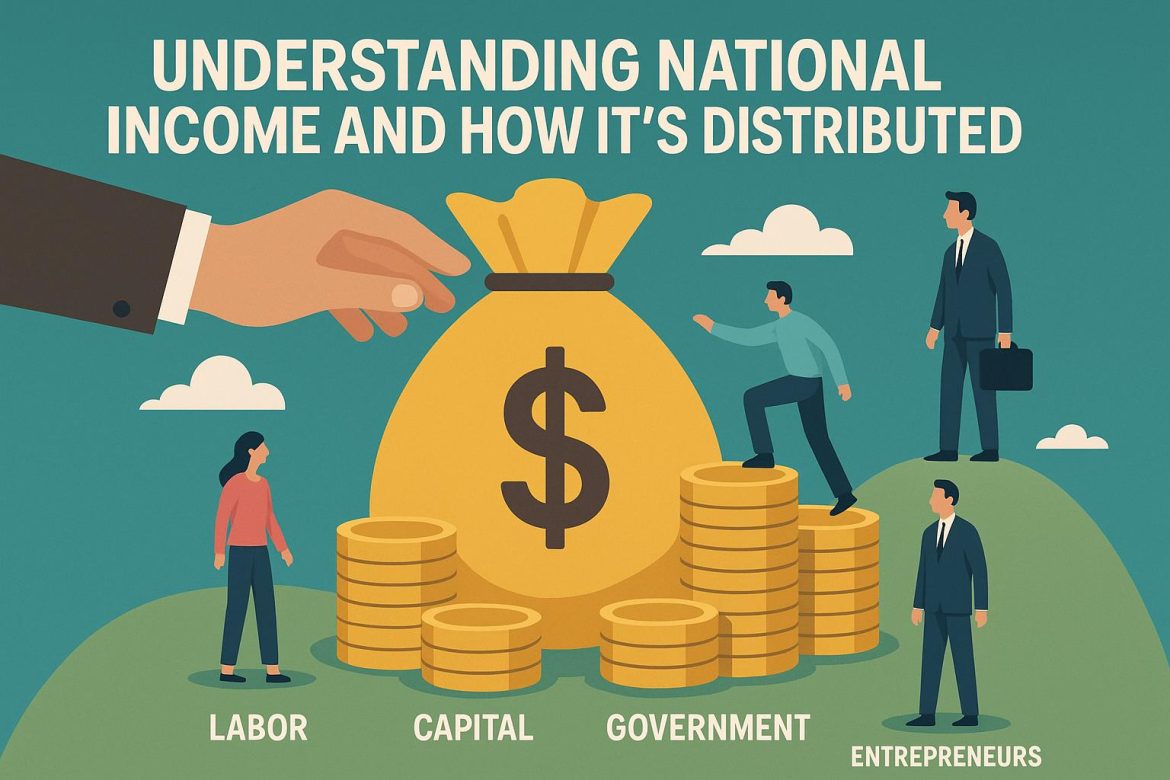
The distribution of national income refers to how the gross national income is spread among the country’s population. This distribution can influence economic equality and living standards. A wide gap between the rich and the poor can indicate significant income inequality, which may necessitate policy intervention.
Implications of Unequal National Income Distribution
Income inequality can lead to several socio-economic challenges, including social unrest, reduced consumer spending, and inefficiencies in resource allocation. As income inequality rises, the purchasing power of a significant portion of the population can diminish, weakening overall economic demand. Governments may need to implement redistribution measures, such as progressive taxation and welfare programs, to address these disparities and foster more balanced economic growth.
Factors Affecting Distribution
Several factors affect how national income is distributed within a country:
Resource Ownership: Those owning more resources, such as land or capital, might receive a larger portion of the income.
Government Policies: Taxation and welfare programs can redistribute income, affecting the overall distribution profile.
Labour Market Dynamics: Employment rates, wage levels, and labor market regulations can impact income distribution patterns.
The Role of Education in Income Distribution
Education also significantly influences income distribution. Higher levels of education typically lead to better job opportunities and higher earnings. Countries that invest heavily in education usually experience more equitable income distribution, as individuals are better equipped with the skills needed to secure well-paying jobs. Conversely, nations with limited access to quality education may face significant income disparities.
Geographical Differences in National Income Distribution
Geographical differences within a country can also affect income distribution. Urban areas often offer more lucrative job opportunities compared to rural regions, leading to disparities in income levels. Mitigating these differences requires targeted policies, like investment in rural infrastructure and policies that encourage business development in less-developed areas.
For a deeper understanding of how national income works and its implications on a country’s economy, resources like economic journal articles or dedicated economic forums provide extensive analyses and discussions. Engaging with these materials can enhance one’s comprehension of national income distribution and its broader socio-economic effects.
By considering the nuances of national income, stakeholders, including governments, businesses, and individuals, can make better decisions that promote sustainable economic growth and improve societal welfare.
This article was last updated on: February 15, 2026